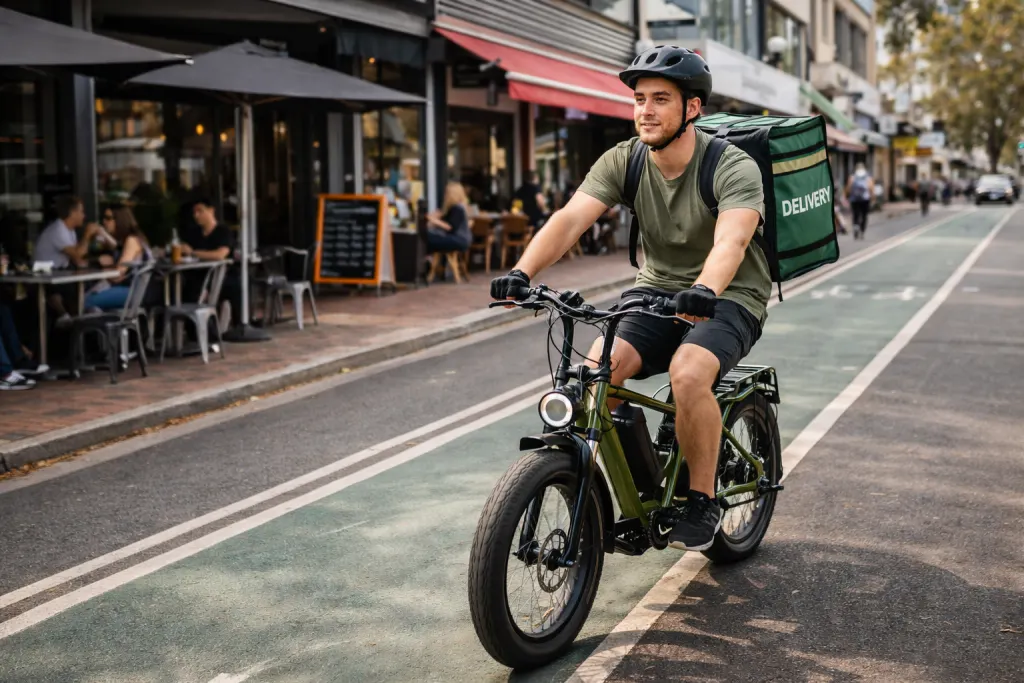
Food delivery by e-bike is one of the most practical side hustles in Australian cities. For older teenagers (18+) and uni students, it offers flexible income with minimal startup costs — and you get exercise as a bonus.
How It Works
The major delivery platforms in Australia — Uber Eats, DoorDash, and Menulog — all accept cyclists, including e-bike riders. You sign up, pass a background check, and start accepting deliveries through the app.
Key requirements:
- You must be 18 or older (no exceptions — this is a platform and legal requirement)
- You need a smartphone with a data plan
- An insulated delivery bag (some platforms provide one, or you buy your own for $20–$40)
- An ABN (Australian Business Number) for tax purposes — free to register
No special licence is needed. An e-bike that complies with Australian regulations (pedal-assist, 250W, 25 km/h limit) is classified as a bicycle. Check the regulations for your state to confirm the specific rules that apply.
Earnings and Reality
Let’s be straightforward about the numbers. Delivery earnings vary significantly based on your city, the time you ride, and how efficiently you work.
Typical ranges:
- $15–$25 per hour before expenses, during busy periods (dinner rush, weekends, rainy days)
- $10–$15 per hour during slower times
- Tips are inconsistent but can add 10–20% in some areas
Expenses to factor in:
- E-bike purchase or subscription cost
- Phone data plan
- Delivery bag
- Bike maintenance (tyres, brake pads, chain)
- Insurance (not provided by platforms — consider personal accident cover)
After expenses, e-bike delivery won’t make you rich. But as a flexible supplement to study or other work, it’s a practical option.
The Zoomo Model
Zoomo is an Australian company that rents purpose-built delivery e-bikes on a subscription basis. This removes the upfront cost barrier.
- Weekly subscriptions from around $39–$69 per week
- The bike is maintained by Zoomo — breakdowns are their problem
- Swap bikes at Zoomo hubs if there’s an issue
- Good option for trying delivery work without committing to a bike purchase
If you’re unsure whether delivery riding suits you, a month on a Zoomo subscription is a low-risk way to find out.
Tax and Deductions
As a delivery rider, you’re operating as a sole trader. That means you lodge a tax return and can claim work-related deductions.
Potentially deductible:
- The cost of the e-bike (depreciated over its useful life, or an immediate deduction under the instant asset write-off for eligible sole traders)
- Repairs and maintenance
- Phone and data costs (the work-related portion)
- Delivery bags and accessories
- Protective gear used for work
Keep receipts and records from day one. The ATO expects delivery riders to report all income and substantiate all claims. Consider using a simple accounting app or spreadsheet.
Note: Tax rules change. This is general guidance, not tax advice. Check the ATO website or speak to a tax professional for your specific situation.
Practical Tips
- Choose your zone wisely. Dense inner-city areas with lots of restaurants generate more orders. Suburban areas mean longer rides between pickups.
- Peak hours matter. Dinner time (5:30–9 pm) and weekends are the busiest. Lunch is quieter but still viable.
- Weather is your friend. Rainy evenings are uncomfortable but highly profitable — fewer riders are out, so demand surges.
- Look after the bike. Keep tyres pumped, chain lubricated, and brakes in good condition. Our battery guide covers charging best practices that will extend your battery’s lifespan — important when the bike is your income. A breakdown during a shift costs you money.
- Stay safe. Wear a helmet (legally required), use lights, and don’t rush through red lights to save thirty seconds. No delivery is worth a crash.
Frequently Asked Questions
Can a 17-year-old do delivery riding?
No. All major platforms require riders to be 18 or older. This is a firm rule tied to insurance, liability, and work health and safety regulations.
Is it worth buying an e-bike specifically for delivery?
It depends on how much you plan to ride. If you’re doing 15+ hours a week, owning a bike is cheaper than renting within a few months — our spending guide covers what to expect at each price tier. If you’re doing five hours a week casually, a subscription or using an existing bike makes more sense.
What about insurance?
Delivery platforms provide limited liability coverage, but personal accident and income protection insurance is your responsibility. As an independent contractor, you’re not covered by workers’ compensation. Look into personal accident policies designed for gig workers.