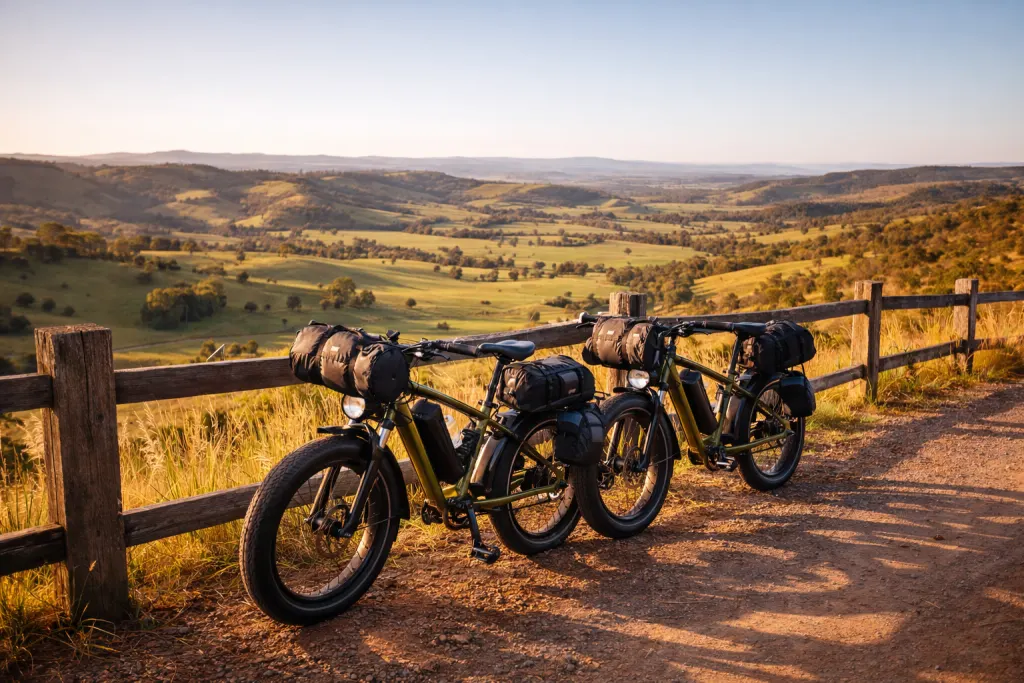
A cycling holiday sounds ambitious — but with e-bikes, it’s genuinely achievable for ordinary families. Australia has hundreds of kilometres of rail trails and cycling routes that are purpose-built for exactly this kind of adventure.
Australia’s Best Family Rail Trails
Rail trails follow old railway lines, which means gentle gradients, wide surfaces, and scenic countryside. They’re the ideal introduction to e-bike touring.
Murray to Mountains Rail Trail (VIC) Over 100 km of sealed paths through northeast Victoria’s wine country. Ride from Beechworth to Bright, stopping at cafes and cellar doors. Flat to gentle grades, well maintained, and very family-friendly.
Great Victorian Rail Trail (VIC) At 134 km, it’s one of Australia’s longest. The full trail takes several days, but shorter sections (Yarra Glen to Healesville, or Alexandra to Mansfield) make excellent day or overnight rides.
Brisbane Valley Rail Trail (QLD) 161 km from Wulkuraka to Yarraman through the scenic Brisbane Valley. Mix of sealed and gravel surfaces — a good test for bikes and riders.
Riesling Trail (SA) 35 km through the Clare Valley wine region. Short enough for a comfortable day ride with plenty of stops for tastings (for the adults) and picnics.
Munda Biddi Trail (WA) Over 1,000 km from Perth to Albany. Mostly unsealed, so suited to e-mountain bikes or gravel bikes. Individual sections make great multi-day adventures for experienced families.
Range and Charging
Range anxiety is the most common concern for e-bike tourists. Here’s how to manage it.
Typical e-bike range: 40–100 km per charge, depending on assist level, terrain, rider weight, and cargo. Our battery guide explains capacity ratings, real-world range, and charging in detail.
Charging on tour:
- Most accommodation (motels, B&Bs, caravan parks) will let you charge overnight. Just ask when booking.
- A full charge from a standard power point takes 4–6 hours — perfect for an overnight stop.
- Carry your charger in a pannier. It weighs about 500 g–1 kg.
- Some riders carry a spare battery for longer off-grid sections, but this adds weight and cost.
Planning tip: Map your daily distances to match accommodation stops. Aim for 40–60 km days for a relaxed family pace. That’s well within most e-bikes’ range on moderate assist.
Australian Conditions
Australia adds a few unique considerations to bike touring.
Heat: Summer touring in inland areas can mean temperatures above 35 degrees Celsius. Start early, take a long lunch break, and ride again in the late afternoon. Carry more water than you think you need — at least 2 litres per person, more in remote areas.
Wind: Coastal and plains routes can be very windy. This is where e-bikes earn their keep — headwinds that would ruin a conventional touring day are manageable with assist. If you’re touring in regional and rural areas, plan for mixed surfaces and longer distances between services. Plan routes to ride with prevailing winds where possible.
Distances between towns: In regional areas, towns can be 50–80 km apart. Plan carefully and ensure your battery range covers the gap, or carry supplies.
Sun protection: Sunscreen, a hat that fits under your helmet, and sunglasses are non-negotiable.
What to Pack
Family touring requires more gear than solo riding, but e-bikes handle the extra weight well.
Essentials:
- Panniers (rear, or front and rear for longer trips)
- Charger and any adapter cables
- Basic tool kit — tyre levers, spare tube, pump, multi-tool
- First-aid kit
- Rain jackets (even in summer — weather changes)
- Water bottles or a hydration pack per rider
- Sunscreen and insect repellent
For kids:
- Snacks — more than you think necessary
- A small backpack with their own water and layers
- Entertainment for rest stops (a book, cards)
- Their own sense of responsibility for their kit
Frequently Asked Questions
What type of e-bike is best for touring?
A hybrid or touring e-bike with a comfortable upright position, pannier mounts, and wide tyres (35–45 mm) suits most Australian rail trails. For unsealed trails, consider a gravel e-bike. Avoid road bikes — they’re too fragile and uncomfortable for loaded touring.
Can we hire e-bikes for touring?
Yes. Several operators along popular rail trails offer e-bike hire, sometimes including panniers and helmets. This is a great way to try touring without buying dedicated bikes. Book well ahead in peak season (spring and autumn).
How far can a family realistically ride in a day?
On flat rail trails with e-bikes, 40–60 km is comfortable for most families with school-age children. That’s roughly three to four hours of riding with breaks. Shorter days of 25–35 km work better with younger children or if you want more time for sightseeing.